BIO 304 · Human Anatomy & Physiology
Axial Skeleton
Skeletal System · Module 5
A reference for the Axial Skeleton video. The axial skeleton runs down the midline: skull, vertebral column, and thoracic cage. It protects the brain, spinal cord, heart, and lungs.
How to use this sheet Toggle the toolbar above. Notes prints the full reference for review. Study prints as a fill-in-the-blank worksheet , print it, then write each definition while you watch the video or read your book. Quiz me is on-screen typing practice; type the term, click Reveal to check yourself.
- Name the eight cranial bones and the major facial bones.
- Identify the five regions of the vertebral column and the number of vertebrae in each.
- Describe the structure of the thoracic cage and distinguish true, false, and floating ribs.
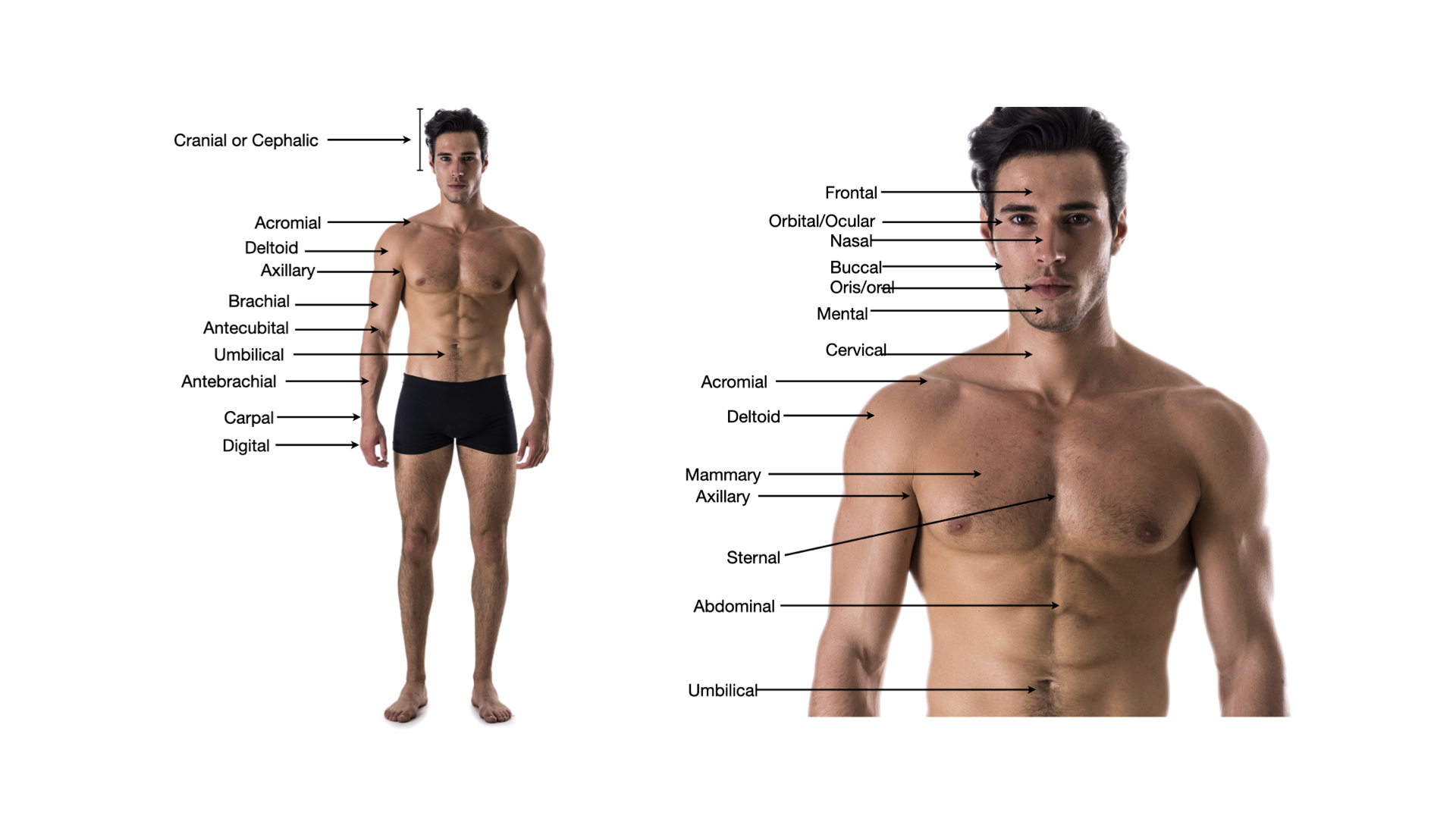
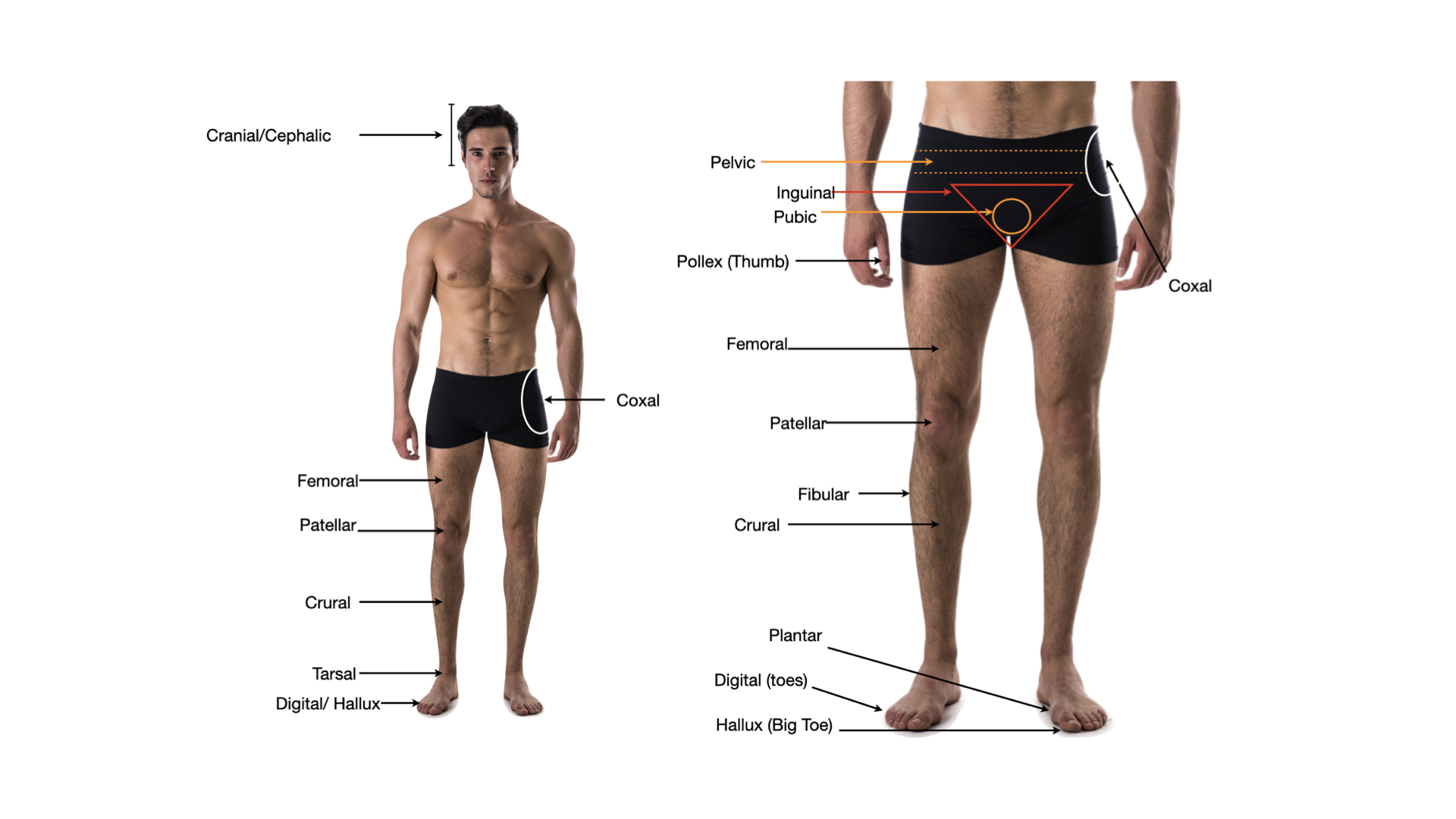
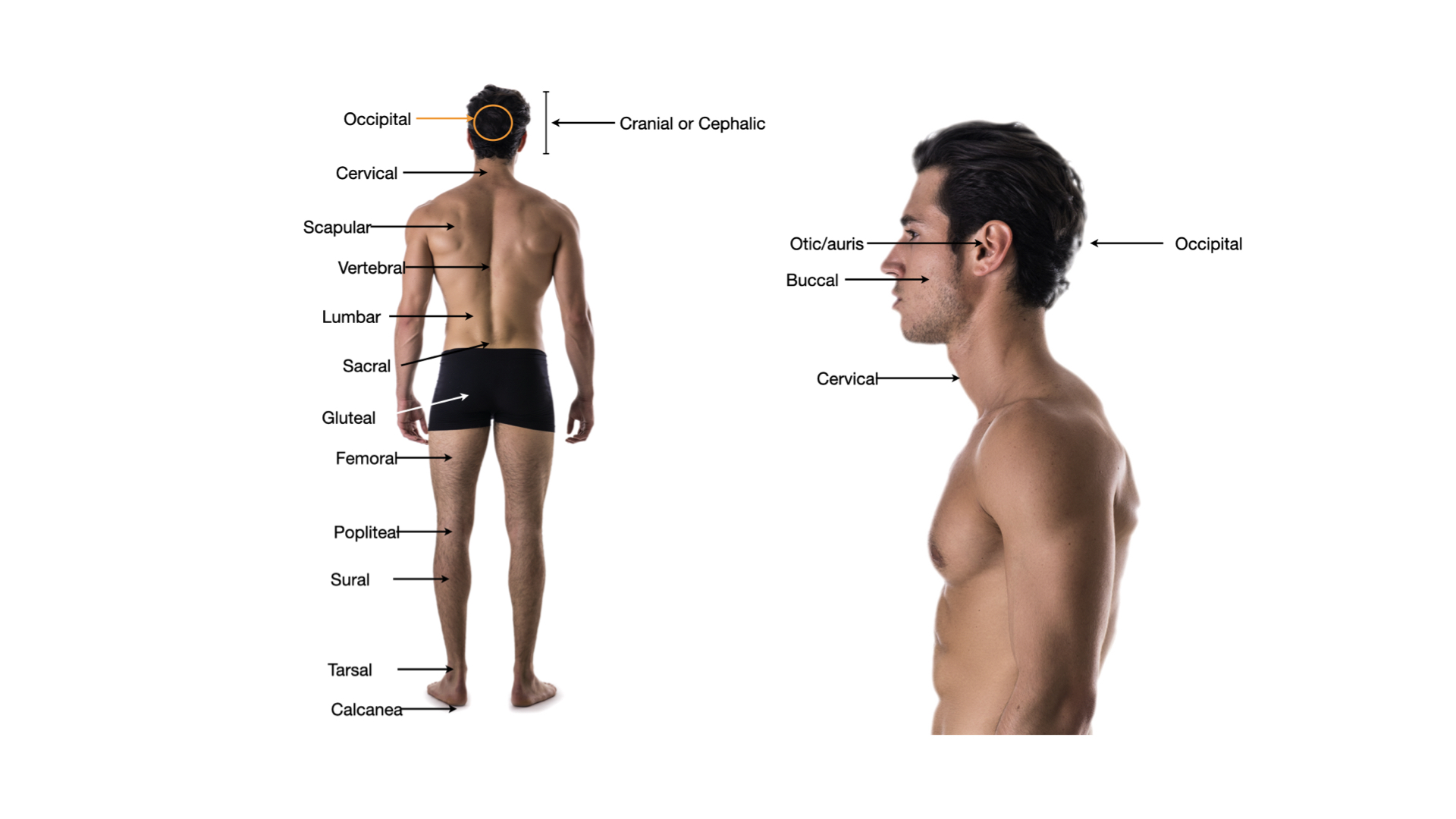
Click any image to enlarge.
Skull
Cranial bones (8)
- Frontal (1)forehead, anterior cranial fossa, frontal sinus
- Parietal (2)most of cranial roof and sides
- Temporal (2)lateral, inferior cranium; houses ear; mastoid process
- Occipital (1)posterior cranium; foramen magnum
- Sphenoid (1)bat-shaped; floor of cranium; sella turcica holds pituitary
- Ethmoid (1)between orbits; cribriform plate (CN I passes through)
Major facial bones (14)
- Maxilla (2)upper jaw, anterior hard palate, holds upper teeth
- Mandible (1)lower jaw — only movable skull bone
- Zygomatic (2)cheekbones
- Nasal (2)bridge of nose
- Lacrimal (2)medial orbit; tear duct passage
- Palatine (2)posterior hard palate
- Vomer (1)inferior nasal septum
- Inferior nasal conchae (2)lateral wall of nasal cavity
Other axial
- Hyoid (1)free-floating in neck; anchors tongue and larynx
- Auditory ossicles (6)malleus, incus, stapes × 2
Vertebral Column & Thoracic Cage
Five regions
- Cervical (C1-C7)neck; smallest bodies; C1 = atlas, C2 = axis
- Thoracic (T1-T12)attaches to ribs; intermediate size
- Lumbar (L1-L5)lower back; largest bodies; bears most weight
- Sacrum5 fused vertebrae; articulates with hip bones
- Coccyx3-5 fused; tailbone
Vertebra parts
- Body (centrum)anterior weight-bearing portion
- Vertebral archposterior; pedicles + laminae
- Spinous processmidline projection; palpable down spine
- Transverse processeslateral projections; muscle attachment
- Vertebral foramenopening that houses spinal cord
- Intervertebral discfibrocartilage cushion; annulus fibrosus + nucleus pulposus
Thoracic cage
- Sternummanubrium + body + xiphoid process
- True ribs (1-7)attach directly to sternum via own costal cartilage
- False ribs (8-10)attach indirectly; share cartilage with rib above
- Floating ribs (11-12)no anterior attachment
Normal curvatures
- Primary curvesthoracic + sacral — present at birth (kyphotic)
- Secondary curvescervical + lumbar — develop with head lifting and walking (lordotic)
Step 3 . Retrieval check
Now explain it back, in your own words.
In 60 words or more, pull together what the video just taught you. Include the key concepts. This is the point where the learning actually sticks. After you submit, your spaced-recall cards for this topic unlock.
Zoomed image
Spaced recall unlocked
Nice work finishing the video.
Your spaced-recall cards for this topic are ready. Open the pre-work to activate them and start drilling.